ILoveMeth Trust and Access: Domain, Reputation and Consumer Risks
 Available in AU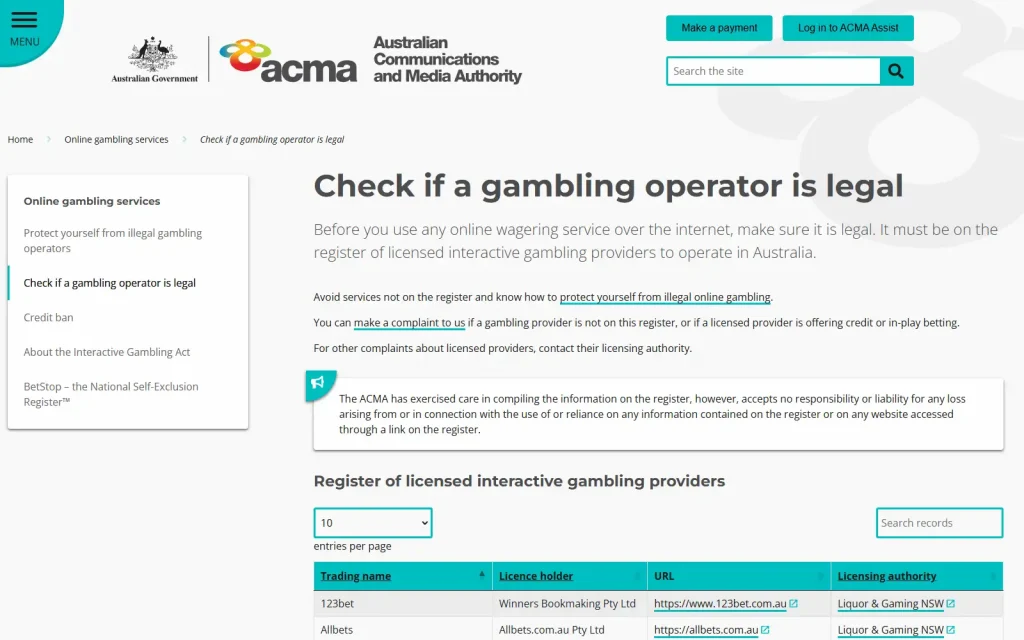
Trust evidence – checked 18 September 2026
Current brand-domain evidence is fragmented: the older ilovemeth.net address is no longer a dependable live-casino destination, while recent Australia-facing third-party listings point to ilovemeth.vip without giving us enough first-party evidence to treat that address as conclusively official. Australian regulators are also actively enforcing rules against prohibited and unlicensed online gambling services. These signals should be kept separate. A site being accessible, a payment method being familiar or a promotion being visible does not by itself establish Australian authorisation, consumer protection or brand identity.
For a site-wide starting point, the ILoveMeth Australia review summarises the same evidence boundaries across bonuses, games, payments, account access and trust. This page therefore does not award a “safe” or “scam” label. Instead, it uses a trust framework that distinguishes domain confidence, Australian licensing status, access signals, payment evidence, terms visibility and practical recourse. That approach is more useful for a brand with a thin current search footprint because it shows exactly which questions are supported and which still require first-party evidence.
Table of Contents
- What each signal can actually tell an Australian reader
- Trust starts with separating identity from accessibility
- Australian regulation is a different question from brand visibility
- ACMA enforcement raises the value of source checks
- Payments can confirm a transaction path, not a licence
- Account and KYC transparency are part of the risk picture
- Consumer recourse deserves its own check
- A practical evidence order for ILoveMeth
- Weight each trust signal by what it can actually prove
- How Australian users can separate access signals from trust signals
- ILoveMeth Trust and Access: Domain, Reputation and Consumer Risks
What each signal can actually tell an Australian reader
| Signal | Current evidence | What it means |
|---|---|---|
| Regulatory status | The brand-specific ACMA register check is kept on the dedicated licence page. | Do not infer regulatory status from access, branding, payment rails or promotional visibility. |
| Current domain | The historical ilovemeth.net address is no longer a reliable live-casino destination. Fresh AU-facing listings point to ilovemeth.vip, but first-party status remains insufficiently verified. | Recheck the address before login, account creation or payment. Domain recency is not the same as ownership proof. |
| Site access | Australia-facing promotion has been observed in multiple third-party sources. | Targeting or technical access can show audience intent, but neither proves licensing or legal protection. |
| Payments | Brand-specific cashier methods need to be confirmed in the live transaction flow. | A familiar Australian payment rail is not a regulator approval signal. |
| Consumer recourse | Australian complaint and self-exclusion mechanisms have defined scopes. | Check whether a service is actually within the licensed wagering framework before assuming those mechanisms apply. |
Trust starts with separating identity from accessibility
A working page can answer only one narrow question: something is reachable at that address at that moment. It does not prove who operates the service, which legal entity stands behind it, which licence applies or whether the page is the current official brand destination. That distinction matters for ILoveMeth because the domain history is unstable enough to make old bookmarks and copied links weak evidence.
The older ilovemeth.net address has been reported as parked rather than operating as a current casino interface. More recent Australia-facing promotional material links the ILoveMeth name to ilovemeth.vip. That newer signal is useful for discovery, but the available public references do not establish the domain as the official permanent address. A sensible trust check therefore compares several current references and watches for unexplained redirects, spelling changes or payment destinations that do not match the brand context.
The dedicated ILoveMeth current site page goes deeper into this domain problem. The practical point here is that access is only one layer in a wider evidence chain. It should not be promoted into a trust verdict.
Australian regulation is a different question from brand visibility
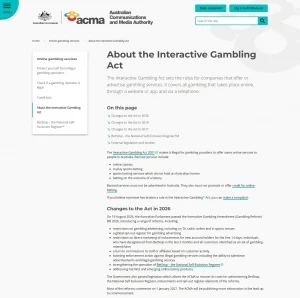
ACMA publishes a register for Australian-licensed interactive wagering providers and separate guidance on the Interactive Gambling Act. Those sources answer regulatory questions that a working website, an advertisement or a familiar payment method cannot answer.
This page keeps that regulatory check separate from the other trust signals. The dedicated licence page records the brand-specific register result, explains the scope of the wagering register and sets it beside ACMA’s guidance on prohibited online casino services. Keeping that detail in one place avoids repeating a licensing caveat on every product or access page.
For the detailed Australian position, see ILoveMeth licence in Australia. The purpose of linking rather than repeating the result is to make the trust assessment easier to read: domain confidence, payment evidence, current terms and regulatory status remain separate checks.
ACMA enforcement raises the value of source checks
Australian enforcement against prohibited and unlicensed interactive gambling services is active rather than theoretical. In its April to June 2026 enforcement report, ACMA recorded 56 Interactive Gambling Act breach findings and referred 187 websites for blocking. The report says most blocked services in that period were casino-style sites offering products such as blackjack, roulette, poker and slots, with some also providing wagering services without an Australian licence.
Those numbers are context, not a brand-specific allegation. The same ACMA report does not establish that ILoveMeth itself was one of the named investigated or blocked services, and this review does not make that claim. The useful inference is procedural: Australians assessing an offshore casino should not treat surface legitimacy as enough. Current regulator status, the current domain, terms visibility and payment destination all deserve independent checks.
This distinction is important because enforcement statistics can otherwise be misused. A high number of blocked sites shows that the regulator is actively disrupting prohibited services. It does not allow every offshore casino to be described as already blocked, investigated or subject to a specific order.
Payments can confirm a transaction path, not a licence
A payment method is useful evidence about how money may move, but it should not be used as a shortcut for deciding whether a gambling service is authorised in Australia. This matters especially when a casino presents a familiar Australian banking method. Familiarity can make a cashier feel local even when regulatory status is separate.
The ILoveMeth payments guide therefore focuses on the live cashier: which method is actually offered, which currency is shown, which recipient or destination is presented and what the withdrawal screen says. Those are transaction facts. They do not answer who licenses the service, whether Australian complaint mechanisms apply or whether a third-party payment destination is appropriate.
For the same reason, a successful deposit would not resolve the trust questions on this page. It would show that one transaction route worked for one account at one time. A stronger trust assessment asks whether the operator identity, current terms, withdrawal rules and regulatory status are transparent enough to understand before money is committed.
Account and KYC transparency are part of the risk picture
Trust also depends on what happens after registration. The current evidence does not support a fixed ILoveMeth registration form, exact KYC document list or verification turnaround time. Those gaps matter because identity information is more sensitive than ordinary browsing data, and because verification can affect access to withdrawals.
The ILoveMeth account and KYC page treats verification as a document-safety decision rather than filling the gap with a generic casino checklist. Before uploading documents, a user should be able to identify the current domain, find the privacy information linked from the account flow, understand why a document is requested and see how that request connects to account or withdrawal requirements.
A well-known logo or a polished interface would not remove the need for those checks. Trust is stronger when sensitive requests are explained in the service’s current authenticated flow and weaker when users are pushed to send identity material through unrelated channels or unexplained third-party destinations.
Consumer recourse deserves its own check
Australian-licensed wagering providers operate within local licensing structures and the national framework that includes BetStop. Brand-specific register status is handled on the dedicated licence page, so this page does not use site access, payment methods or marketing visibility as substitutes for that regulatory check.
BetStop itself is limited in scope. Its official information says the national self-exclusion register applies to Australian-licensed online and phone wagering providers and does not apply to online casino games or other gambling services illegally provided in Australia. That means BetStop should not be presented as a mechanism for blocking access to ILoveMeth.
Gambling Help Online remains available regardless of which service a person has used. ACMA points Australians to the National Gambling Helpline on 1800 858 858 and to Gambling Help Online for free, professional and confidential 24/7 support. This is support for gambling harm, not a certification of any casino.
A practical evidence order for ILoveMeth
1. Confirm the current destination
Compare the domain across recent independent references and inspect redirects before login, personal-data entry or payment.
2. Check Australian regulatory status
Use ACMA’s register for licensed interactive wagering providers and keep that check separate from casino access or advertising.
3. Read the live terms
Look for operator identity, account rules, verification requirements, withdrawal conditions and privacy information in the current service.
4. Verify transaction details
Confirm the actual payment method, recipient, currency and withdrawal route instead of relying on promotional lists.
This sequence is deliberately evidence-led. It avoids the opposite errors of treating a single weak signal as proof of legitimacy or turning incomplete evidence into an accusation. For a brand with a sparse conventional search footprint, the quality of each source matters more than the number of promotional mentions.
Weight each trust signal by what it can actually prove
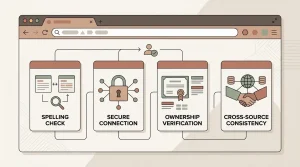
A strong trust assessment does not add weak signals together until they look conclusive. A working login page can prove access at that moment; a payment instruction can prove where money is being requested; a regulator page can answer a licensing or legal-status question; and current terms can define the operator’s own account rules. Each source is useful only inside that boundary.
This matters when the brand has changing domains or sparse first-party documentation. If one layer cannot be verified, the gap should remain visible rather than being filled by a familiar payment logo, a polished interface or a positive promotional post. That approach gives more weight to direct operator and regulator evidence while still allowing practical access and payment observations to be recorded for what they are.
How Australian users can separate access signals from trust signals
For ILoveMeth, current access and Australia-facing promotion are not substitutes for stable first-party domain evidence, a separate regulator check or clearly documented consumer recourse. The strongest current position is therefore a layered one: verify the domain, check ACMA status independently, read the live account and payment terms, and avoid turning familiar branding or payment convenience into a broader trust conclusion. Where first-party evidence remains thin, the correct response is to keep that specific point unresolved rather than filling the gap with a rating or accusation.