ILoveMeth PayID: What Australian Users Should Verify
 Available in AU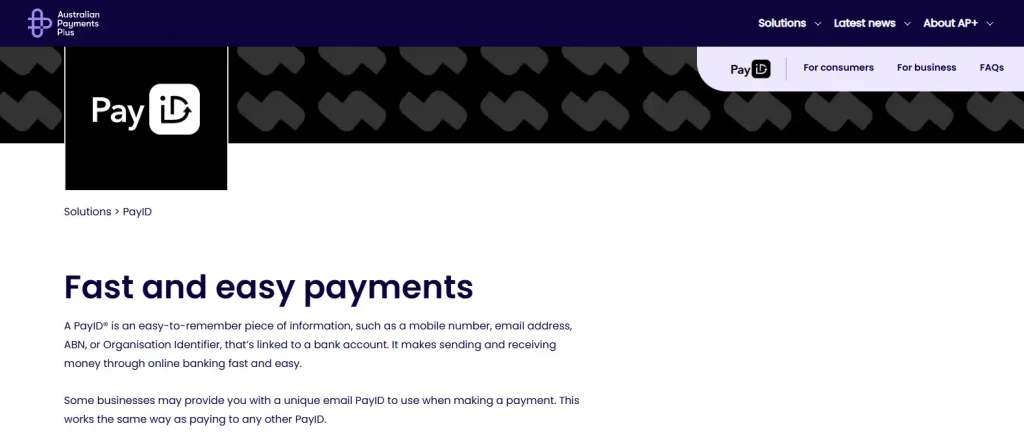
PayID evidence – checked 18 September 2026
PayID is a widely available Australian bank-account payment identifier, but current evidence is not strong enough to confirm it as an active ILoveMeth payment method. If PayID appears in the live cashier, verify the exact identifier and the payee name shown by your bank before authorising the transfer. Also check whether the method is deposit-only, whether a different route is required for withdrawals, and whether the cashier shows any fee or limit.
The ILoveMeth casino overview provides the broader brand context. The key distinction is simple: PayID can be a legitimate Australian payment rail while support by a particular casino remains unverified. A familiar payment method should therefore be treated as a transaction tool, not as proof of the operator’s licensing, consumer protection or withdrawal performance.
Table of Contents
- What PayID proves and what it does not prove
- PayID is an account identifier, not a casino-specific badge
- The payee-name screen is the most important PayID checkpoint
- Australian Payments Plus warns about illegal gambling scams using PayID
- Deposit support says nothing about the withdrawal route
- PayID does not substitute for an Australian licence check
- A five-step check if PayID appears in the cashier
- What to record before authorising a PayID transfer
- When PayID evidence is strong enough to rely on
- Recommend
What PayID proves and what it does not prove
| Question | Answer | Why it matters |
|---|---|---|
| Is PayID a real Australian payment system? | Yes. It is an identifier linked to a bank account and used through participating financial institutions. | You can assess the payment rail using authoritative Australian guidance. |
| Does PayID show a payee name before payment? | Australian Payments Plus says the payer is shown the name linked to the PayID before sending. | The name check can help catch a wrong or unexpected recipient. |
| Is PayID currently verified as an ILoveMeth cashier option? | No. | Availability should be confirmed in the live cashier before sending funds. |
| Does PayID availability prove an Australian gambling licence? | No. | A payment rail and a gambling licence are separate matters. |
| Does a PayID deposit prove how withdrawals work? | No. | Withdrawal destinations, limits, fees and processing information require their own check. |
PayID is an account identifier, not a casino-specific badge
Australian Payments Plus describes a PayID as an easy-to-remember identifier such as a mobile number, email address, ABN or organisation identifier linked to a bank account. Instead of entering a BSB and account number, a payer can use the identifier inside participating online banking. Businesses can also provide a unique email PayID for a payment.
That makes PayID useful for transaction addressing, but it says nothing by itself about the business receiving the funds. The same underlying payment mechanism can be used by many legitimate organisations, and the existence of the rail does not validate the commercial or regulatory status of every recipient.
For ILoveMeth, the broader deposits and withdrawals therefore treats PayID as Australian payment context rather than a confirmed brand feature. If the current cashier does not display PayID, an old listing or third-party mention should not override the live account interface.
The payee-name screen is the most important PayID checkpoint
Australian Payments Plus highlights that the payer is shown the name linked to a PayID before hitting send. That is a practical control because it gives you a chance to compare the recipient displayed by your bank with the recipient expected from the transaction flow.
If ILoveMeth presents a PayID in the cashier, copy the identifier directly from the current payment screen rather than from a message, saved image, social post or old review. Enter it in online banking, pause at the confirmation screen and inspect the payee name. If the name is missing, unexpected or materially different from what the cashier tells you to expect, do not treat the transfer as confirmed merely because the PayID itself looks valid.
PayID can use email addresses and other identifiers that look ordinary, so the identifier format is not a trust test. The banking confirmation step is more useful because it is tied to the registered PayID record. If anything does not reconcile, contact the financial institution before authorising the transfer.
Australian Payments Plus warns about illegal gambling scams using PayID
Australian Payments Plus has a specific scam warning about illegal online gambling sites requesting PayID transfers. Its guidance tells users to stop and check who they are paying and to contact their financial institution if they believe they have been scammed.
This warning should not be converted into an unsupported allegation about ILoveMeth. It is general consumer-risk guidance for a payment method that can be misused. The relevant lesson is to verify the recipient, the transaction destination and the service itself before transferring money.
Deposit support says nothing about the withdrawal route
Even if PayID appears as a deposit option, do not assume the same method is used to receive withdrawals. Deposit and payout rails can differ, and the current evidence does not verify ILoveMeth’s exact withdrawal methods, limits, fees or processing times.
Before depositing, inspect the withdrawal section if the account interface allows it. Look for the available payout destinations, any account-verification requirement, the currency used and any limit or fee shown. If those details are not available until later, treat the withdrawal path as unknown rather than relying on a generic claim such as “instant payout” or “same-method withdrawal”.
This separation is especially important when a payment method is popular locally. Familiarity can make the deposit step feel straightforward while the withdrawal process remains completely different. The useful comparison is the whole money flow, not only the first transaction.
PayID does not substitute for an Australian licence check
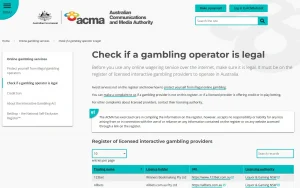
ACMA maintains a register for licensed interactive wagering providers and advises users to check whether an online wagering service appears on it. A domestic payment method does not place a gambling service on that register and does not create Australian consumer protections by itself.
The separate ACMA and legal status page covers ILoveMeth’s Australian licensing position, while the broader trust and consumer risks page deals with site-access and verification signals. Those are separate checks from whether a bank can technically send money to a PayID.
A five-step check if PayID appears in the cashier
1. Confirm the source
Use the PayID displayed in the live account cashier, not an identifier copied from a third-party post or unsolicited message.
2. Check the payee name
Compare the name shown by your bank with the recipient information presented in the transaction flow before authorising payment.
3. Check AUD and the amount
Confirm the currency and exact amount your bank says will be sent, then compare it with what the cashier says will be credited.
4. Check the withdrawal path
Find out whether PayID is deposit-only and what method is available for withdrawals before you fund the account.
5. Check fees and limits
Use current on-screen terms for any minimum, maximum or fee. Do not import values from another casino or an old review.
What to record before authorising a PayID transfer
Australian Payments Plus describes PayID as an identifier linked to a bank account, such as a mobile number, email address, ABN or organisation identifier. Its consumer guidance also says the payer is shown the name linked to the PayID before sending money. Those two details create a useful checkpoint if a PayID instruction ever appears in an ILoveMeth cashier: the identifier and the displayed payee name should be treated as transaction evidence, not as a shortcut around the other checks on this page.
- Record the identifier exactly. A copied email address or mobile number is easier to compare later than a memory of what the cashier showed.
- Read the payee name before sending. If the bank displays a person or business name that you did not expect, stop and resolve the mismatch instead of assuming it is harmless.
- Keep the payment reference. A reference, amount and timestamp make it easier to explain the transaction to your financial institution if something goes wrong.
- Separate deposit evidence from withdrawal evidence. A PayID instruction for sending money does not prove that the same rail is available for cashing out.
- Check any bank warning. Security checks can delay or stop a payment, so a payment not moving instantly is not evidence about casino processing speed.
AP+ also advises consumers to contact their financial institution if they think they have been scammed, and says PayID itself will not contact users asking them to send money, receive money or upgrade an account. That is relevant because the safest response to a suspicious payment instruction is to involve the bank that controls the transfer rather than trying to resolve it through an unfamiliar payment contact.
For current mechanics, see the Australian Payments Plus PayID FAQs. This does not verify ILoveMeth support. It simply gives an Australian primary source for how the payment rail works and what the payer should see before authorising a transfer.
When PayID evidence is strong enough to rely on
For an ILoveMeth payment claim, the strongest evidence would be the current account cashier or another current first-party payment page showing PayID for the relevant account. Until that exists, PayID should be treated as a well-documented Australian payment rail whose availability at ILoveMeth still needs confirmation. If it appears, verify the live identifier, the payee name, the currency, any fee or limit and the separate withdrawal route before sending money. That gives the payment method appropriate weight without turning a familiar Australian banking feature into a broader trust or licensing claim.
Recommend
ILoveMeth Trust and Access: Domain, Reputation and Consumer Risks
ilovemeth Australia Guide Trust evidence - checked 18 September 2026 Current brand-domain evidence is fragmented:...
ILoveMeth Account and KYC: Registration and Verification Checks
ilovemeth Australia Guide Account evidence - checked 18 September 2026 ILoveMeth has multiple Australia-facing third-party...

ILoveMeth Bonuses in Australia: What Is Actually Verified
ilovemeth Australia Guide Bonus evidence - checked 18 September 2026 Australian-facing third-party channels market ILoveMeth...

ILoveMeth Pokies and Casino Games: What the Current Evidence Shows
ilovemeth Australia Guide Pokies and games - checked 18 September 2026 Australian-facing sources position ILoveMeth...
ILoveMeth Payments in Australia: Deposits, Withdrawals and AUD Checks
ilovemeth Australia Guide Payments evidence - checked 18 September 2026 The useful answer for Australian...
ILoveMeth Mobile Casino: Browser Access, App Claims and Mobile Use
ilovemeth Australia Guide Mobile evidence - checked 18 September 2026 ILoveMeth has clear historical evidence...